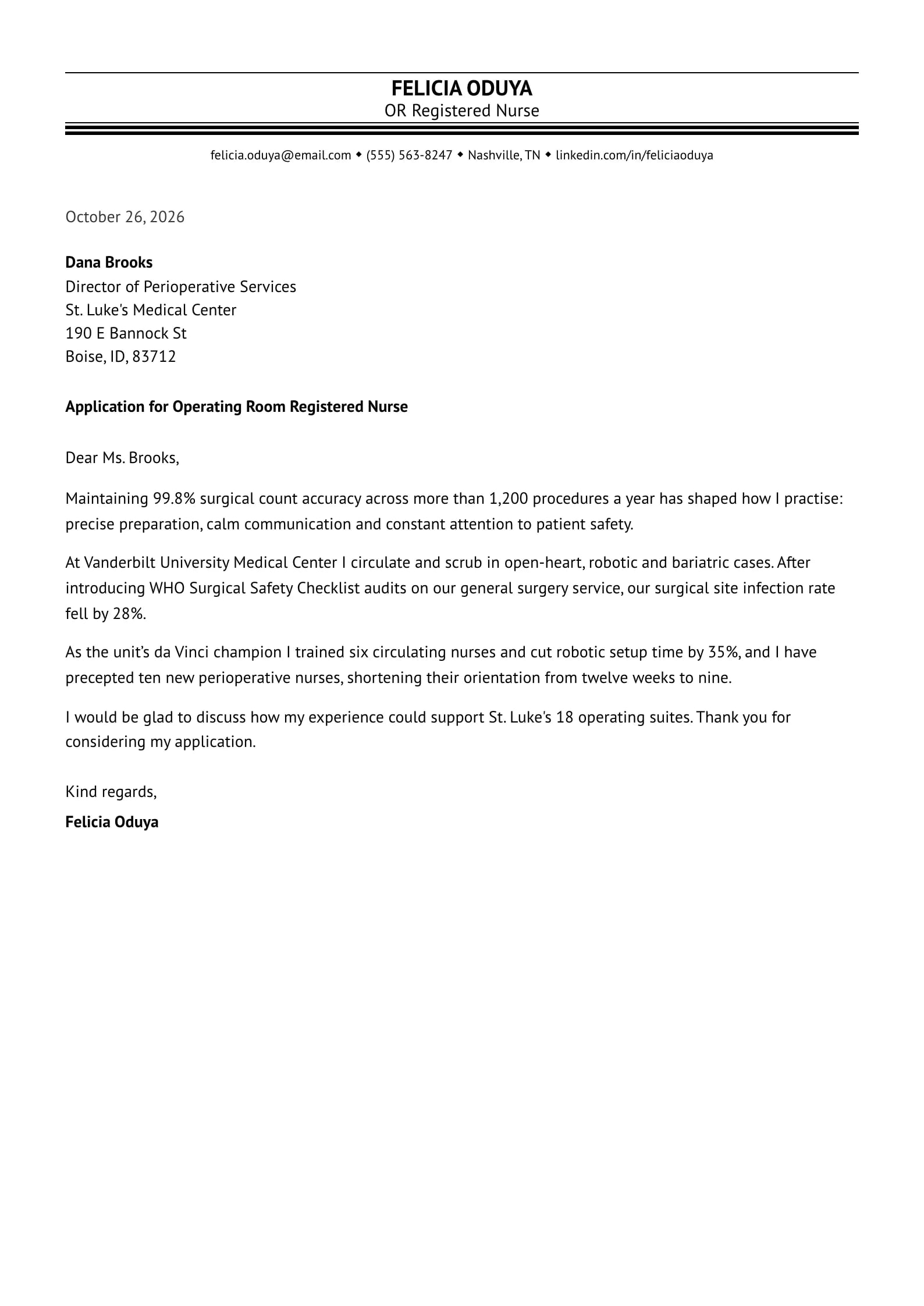
Heritage
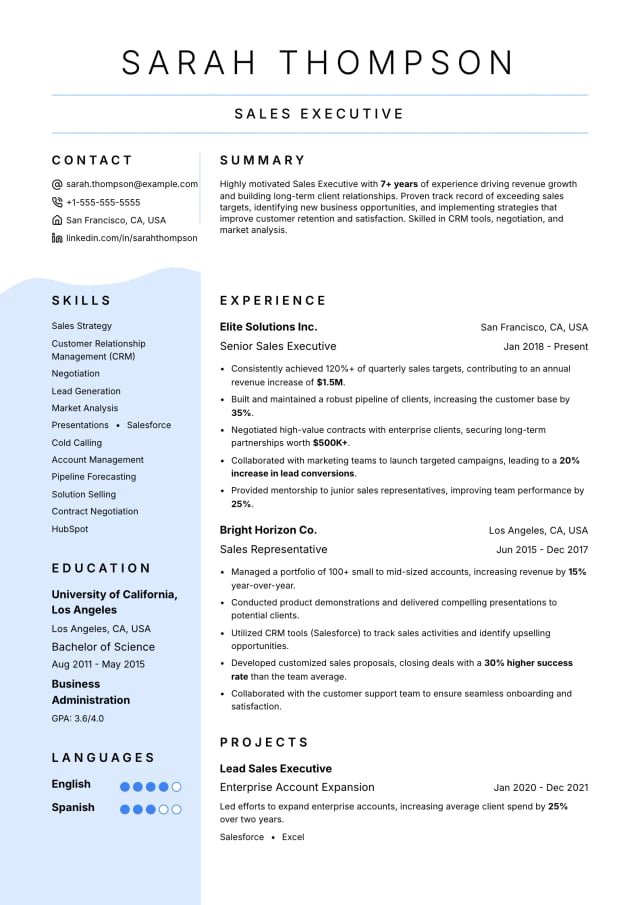
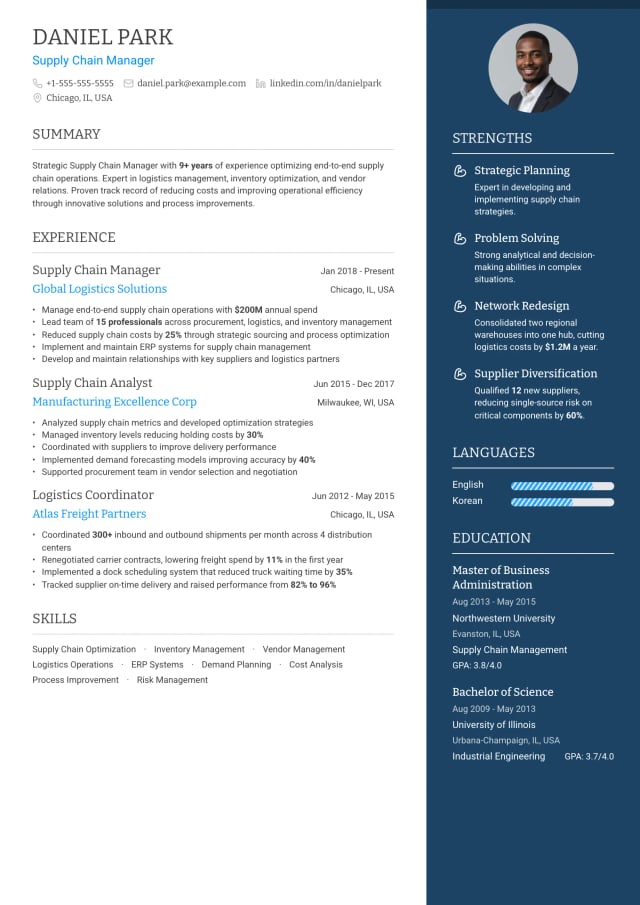
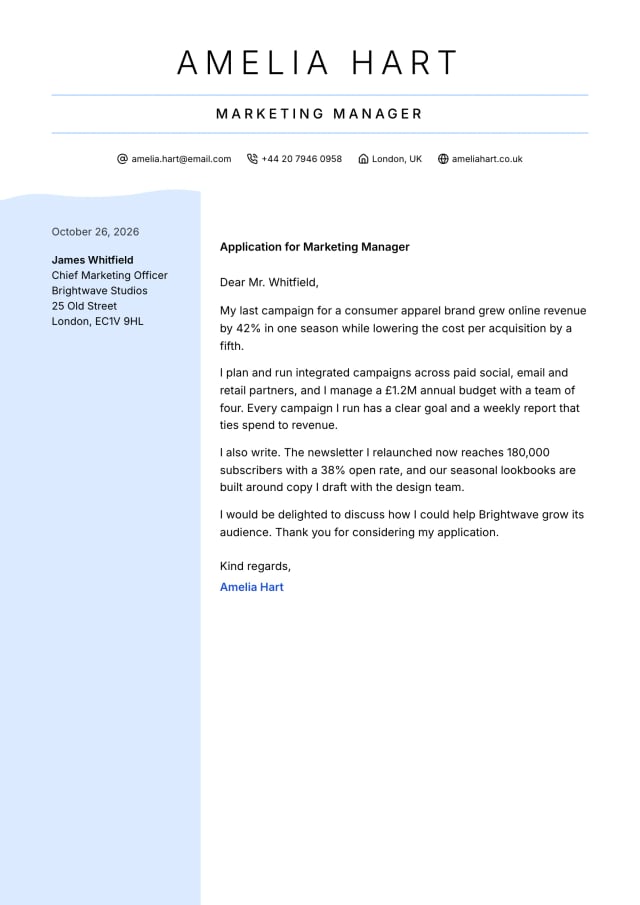
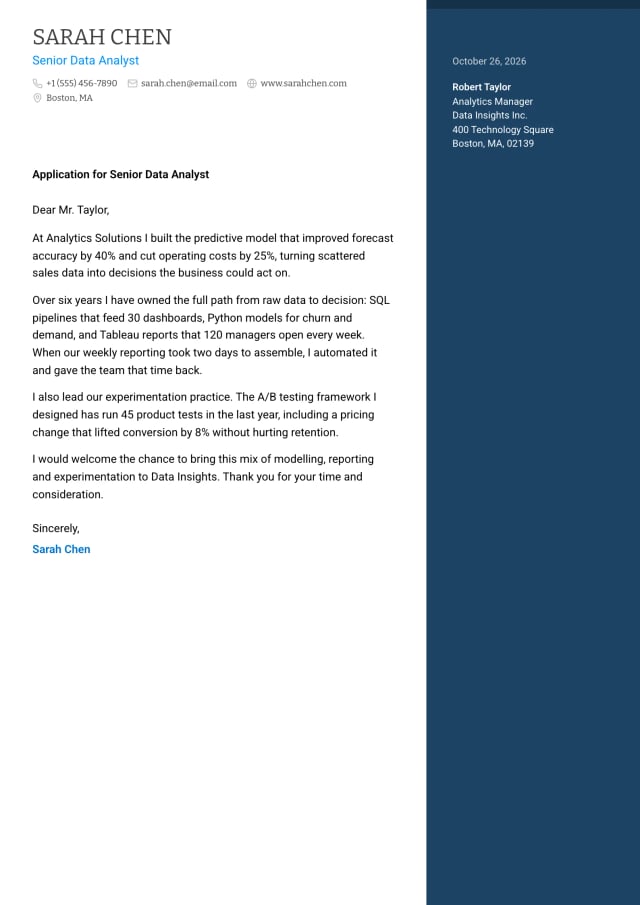
Matches the “Heritage” resume template: same header, colors and fonts, so your letter and resume read as one set.

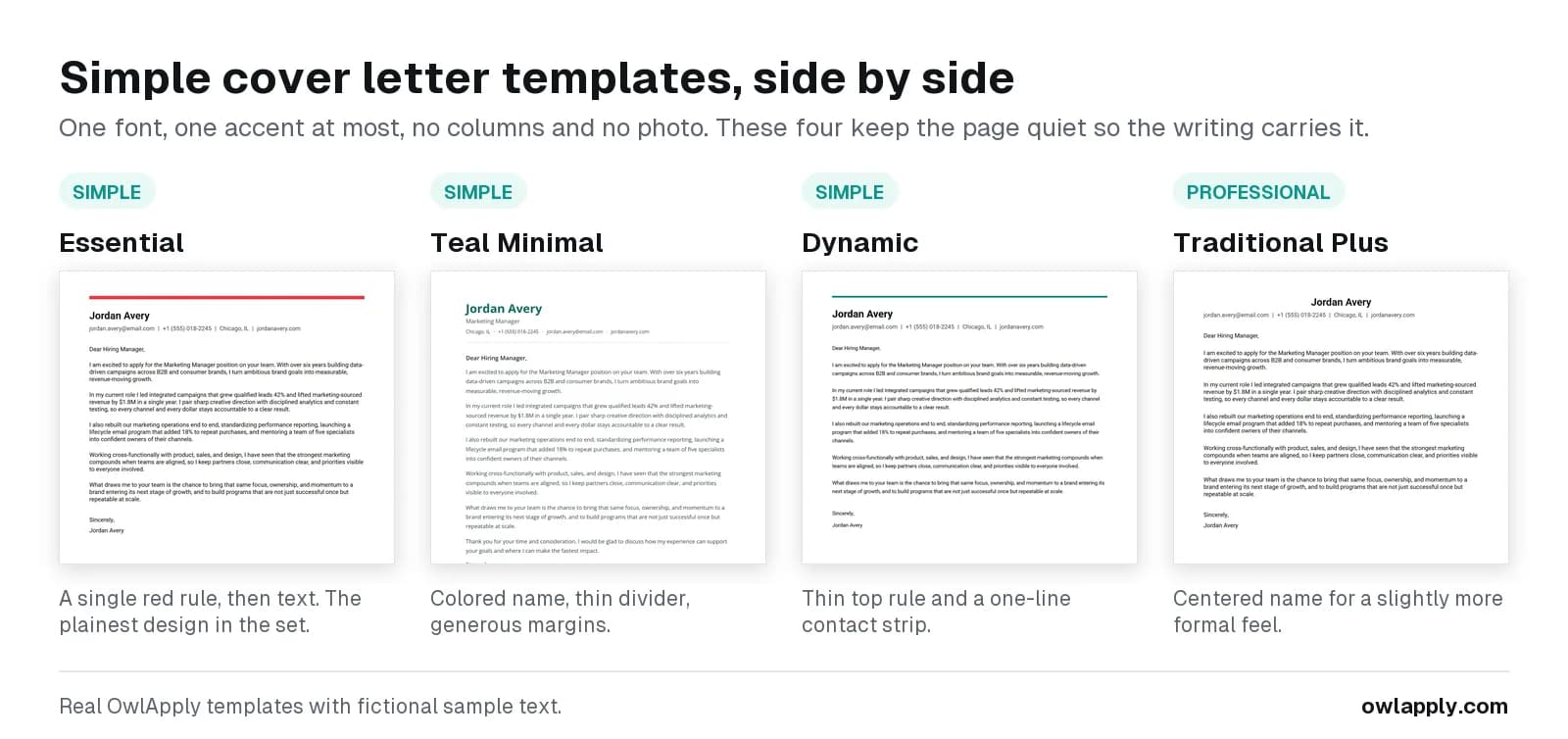
A simple cover letter template is a plain one-page layout: one font, left-aligned text and no columns, photos or graphics. It suits almost any job, reads cleanly in applicant tracking systems and keeps attention on what you write. Pick a design below or copy the fill-in template further down.
Matches the “Heritage” resume template: same header, colors and fonts, so your letter and resume read as one set.
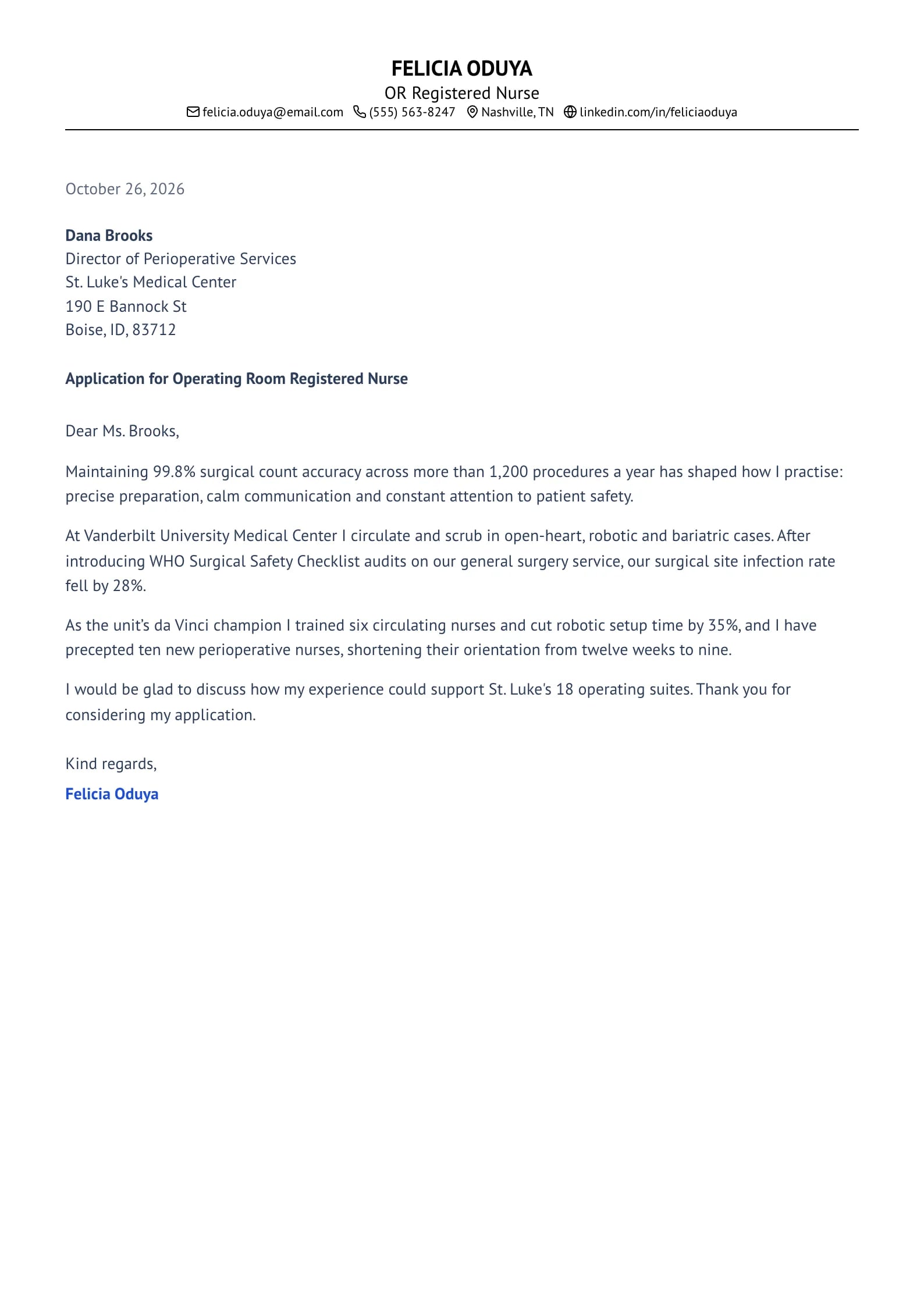
Matches the “Laurel” resume template: same header, colors and fonts, so your letter and resume read as one set.
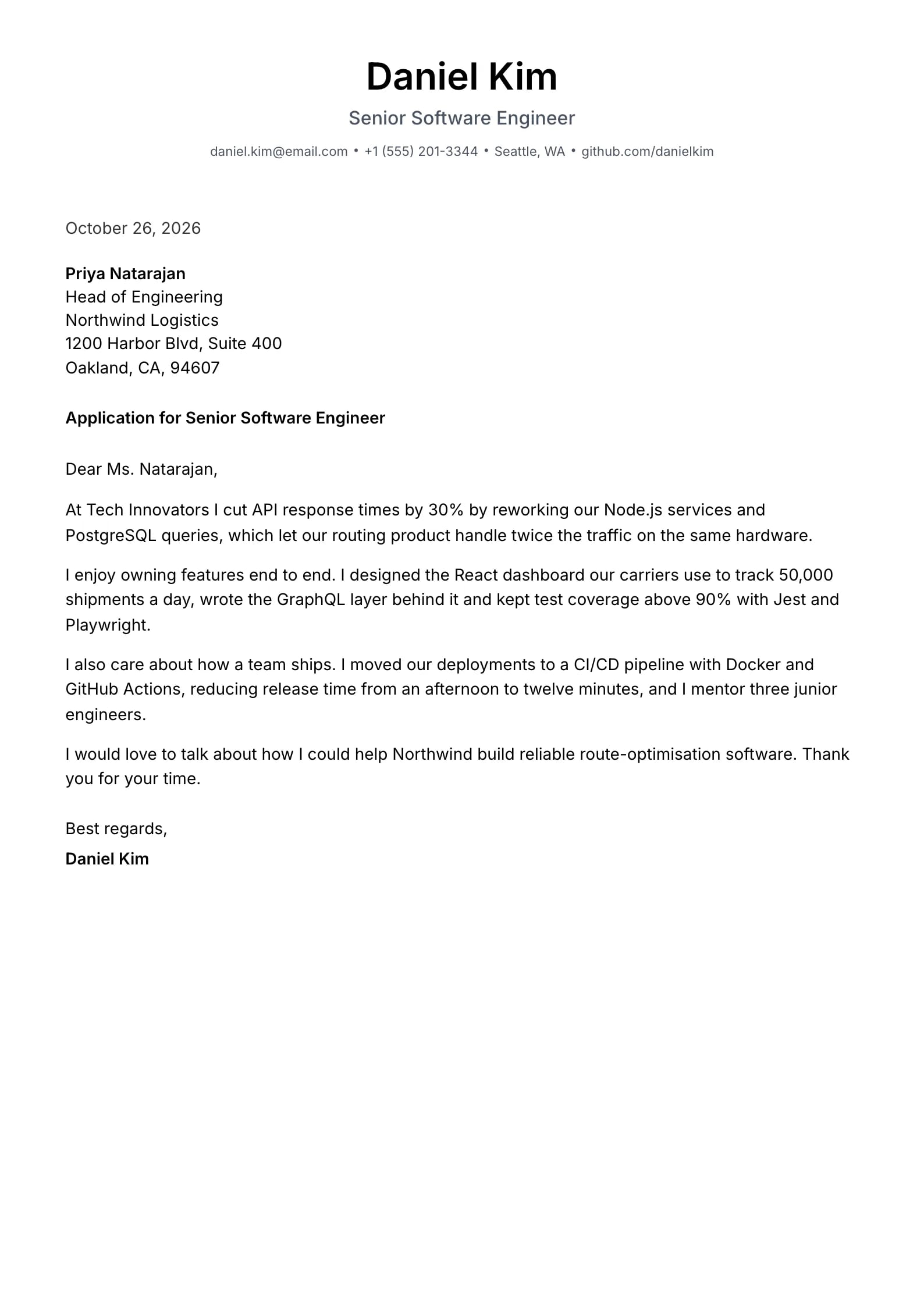
Matches the “Vellum” resume template: same header, colors and fonts, so your letter and resume read as one set.
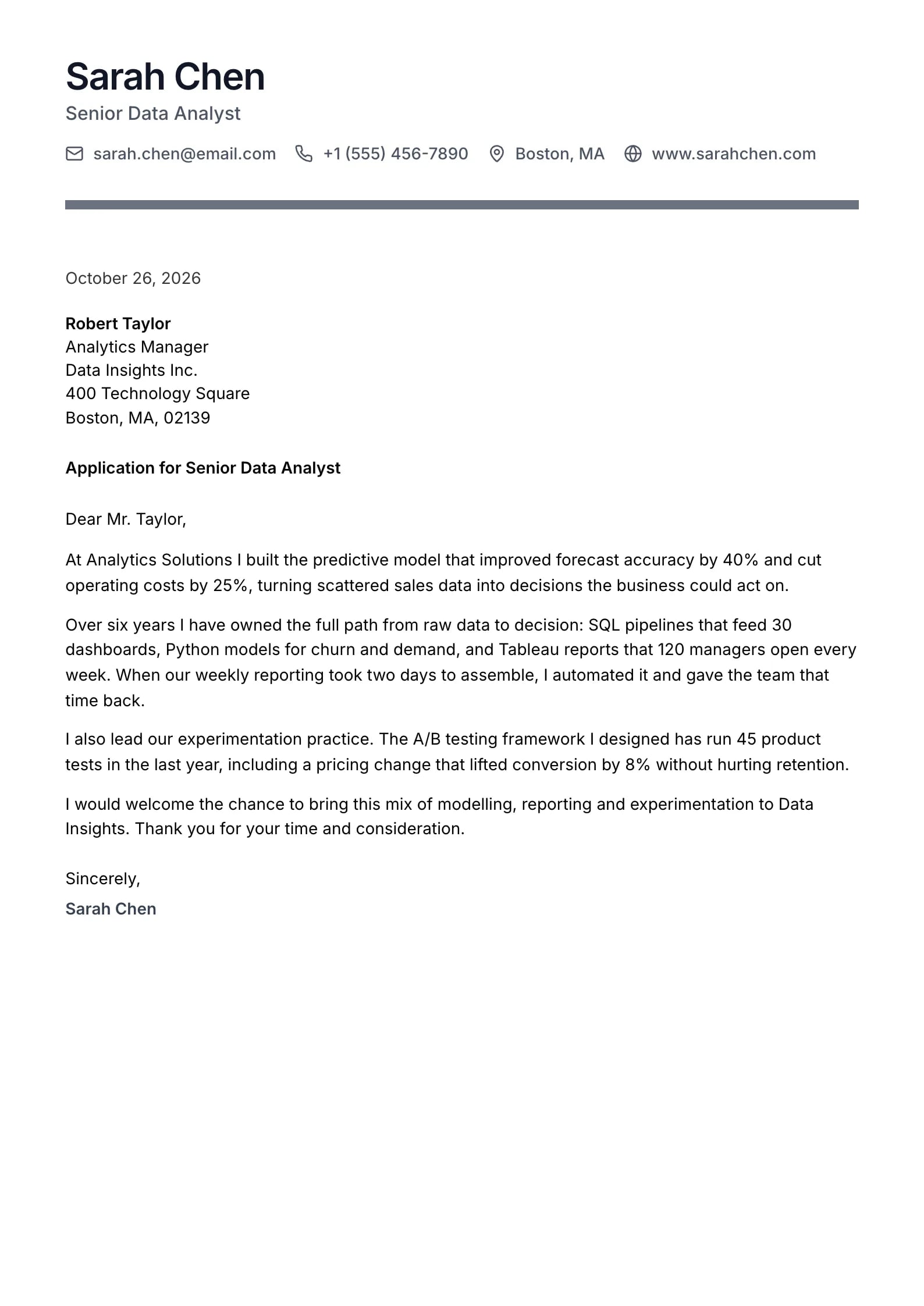
Matches the “Pewter” resume template: same header, colors and fonts, so your letter and resume read as one set.
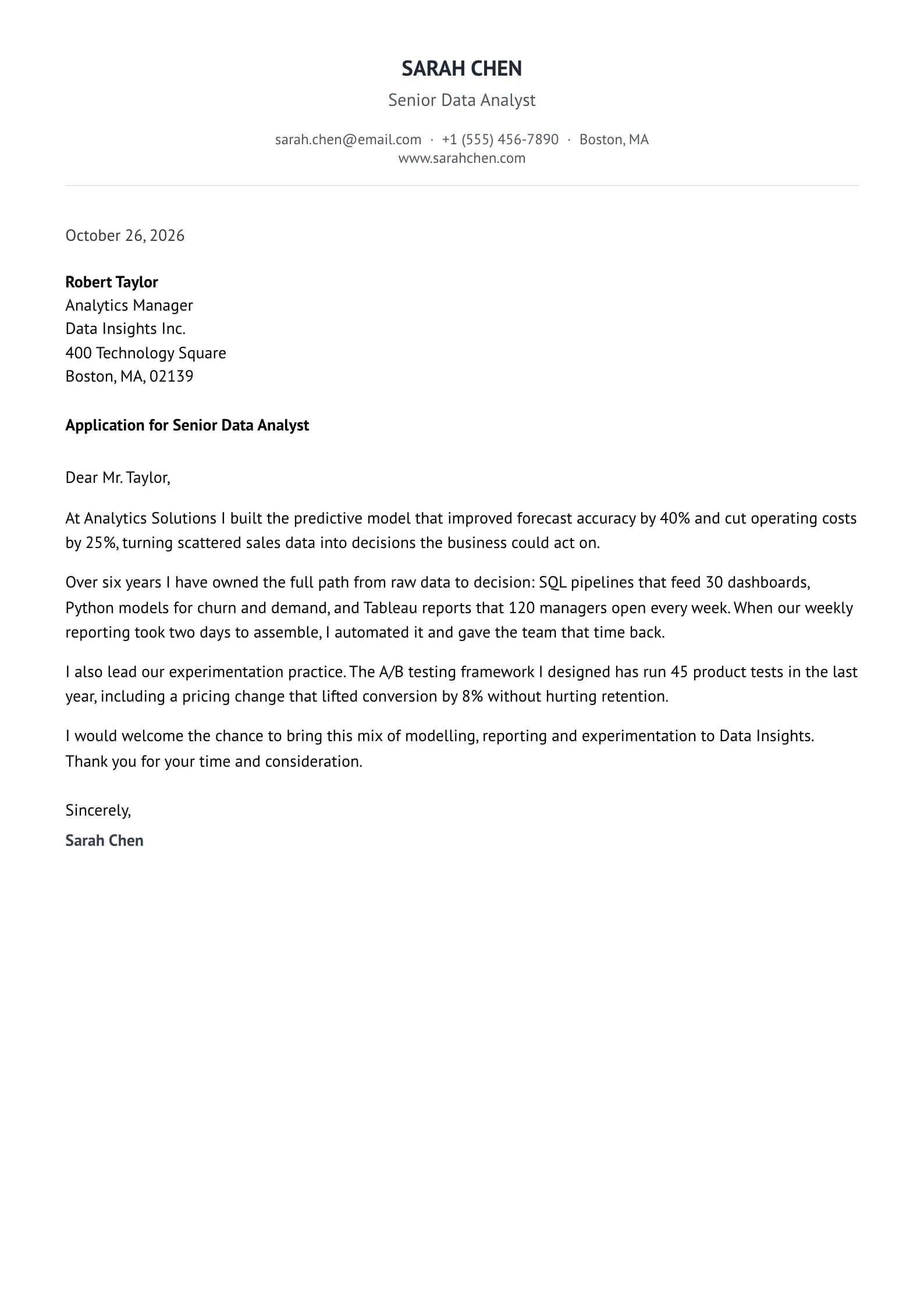
Matches the “Regent” resume template: same header, colors and fonts, so your letter and resume read as one set.
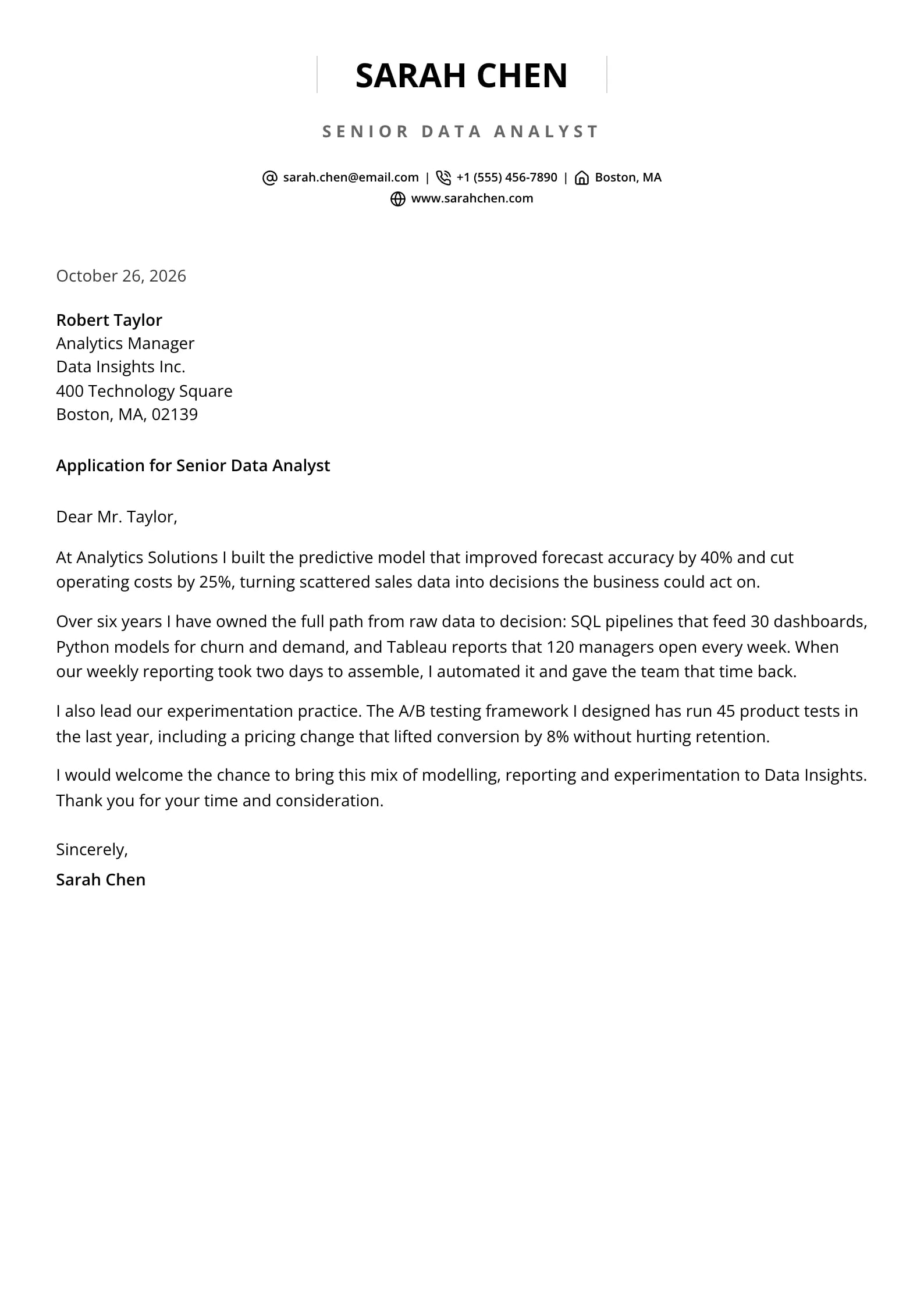
Matches the “Pillar” resume template: same header, colors and fonts, so your letter and resume read as one set.
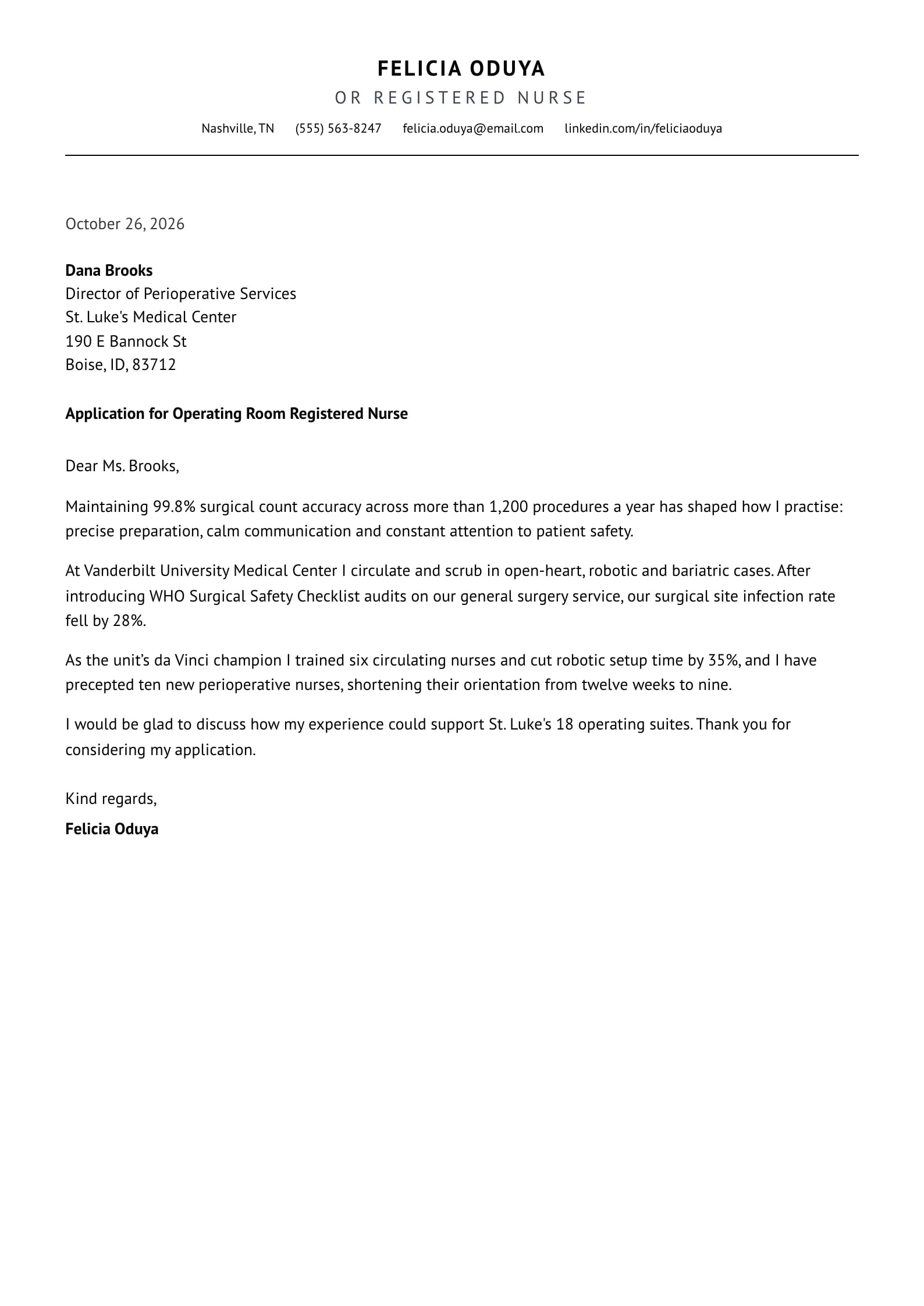
Matches the “Barrister” resume template: same header, colors and fonts, so your letter and resume read as one set.
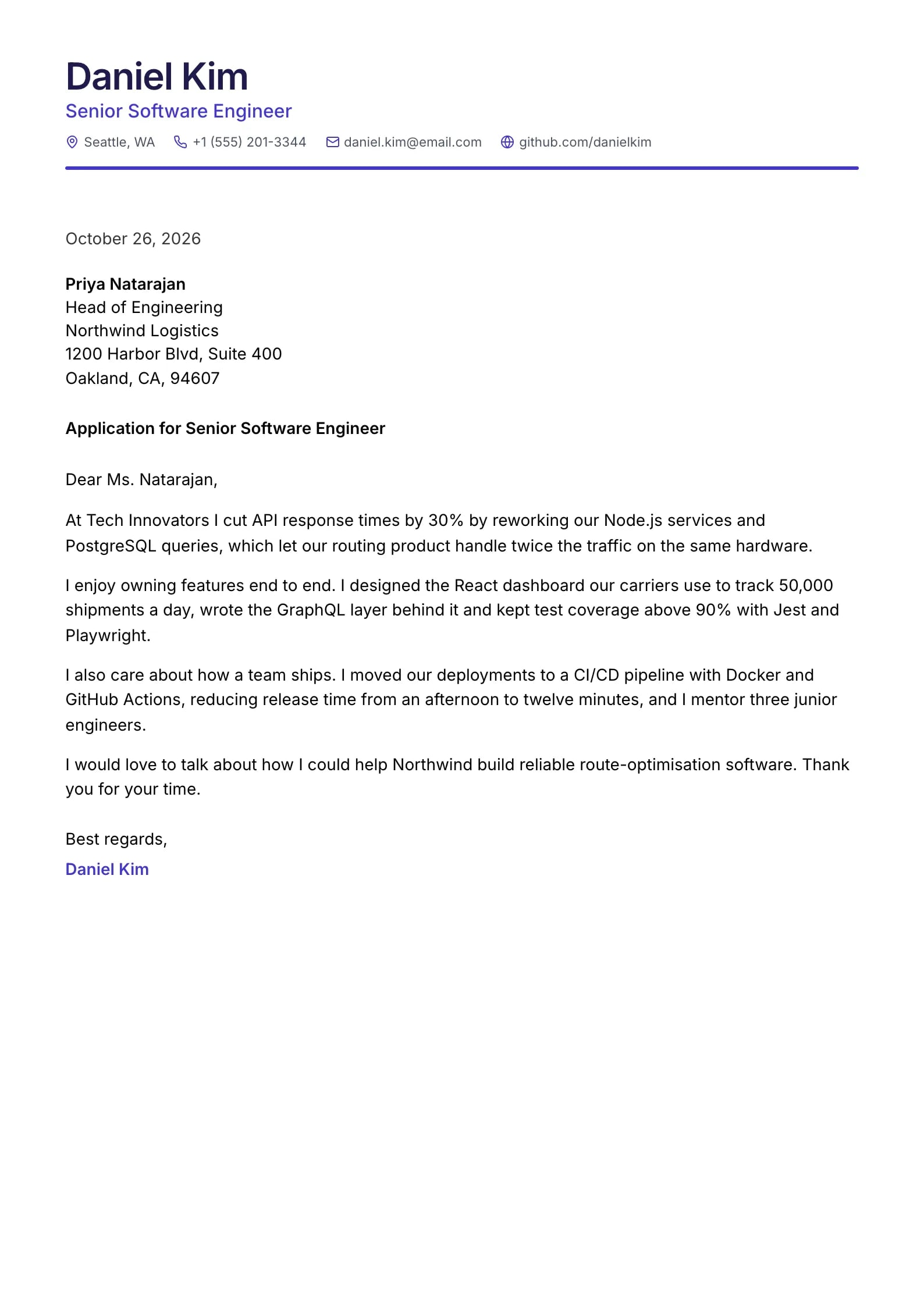
Matches the “Indigo” resume template: same header, colors and fonts, so your letter and resume read as one set.
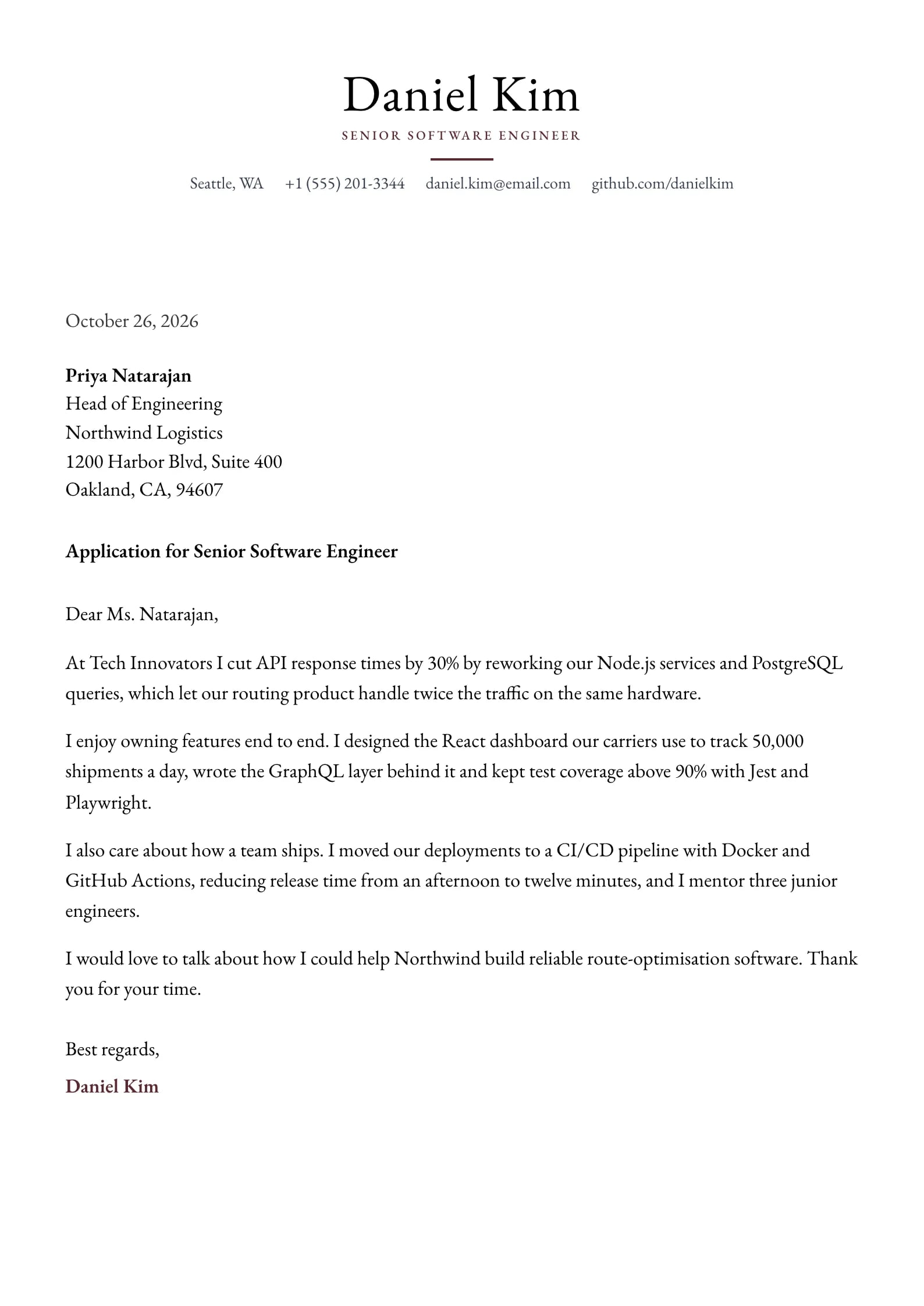
Matches the “Garnet” resume template: same header, colors and fonts, so your letter and resume read as one set.
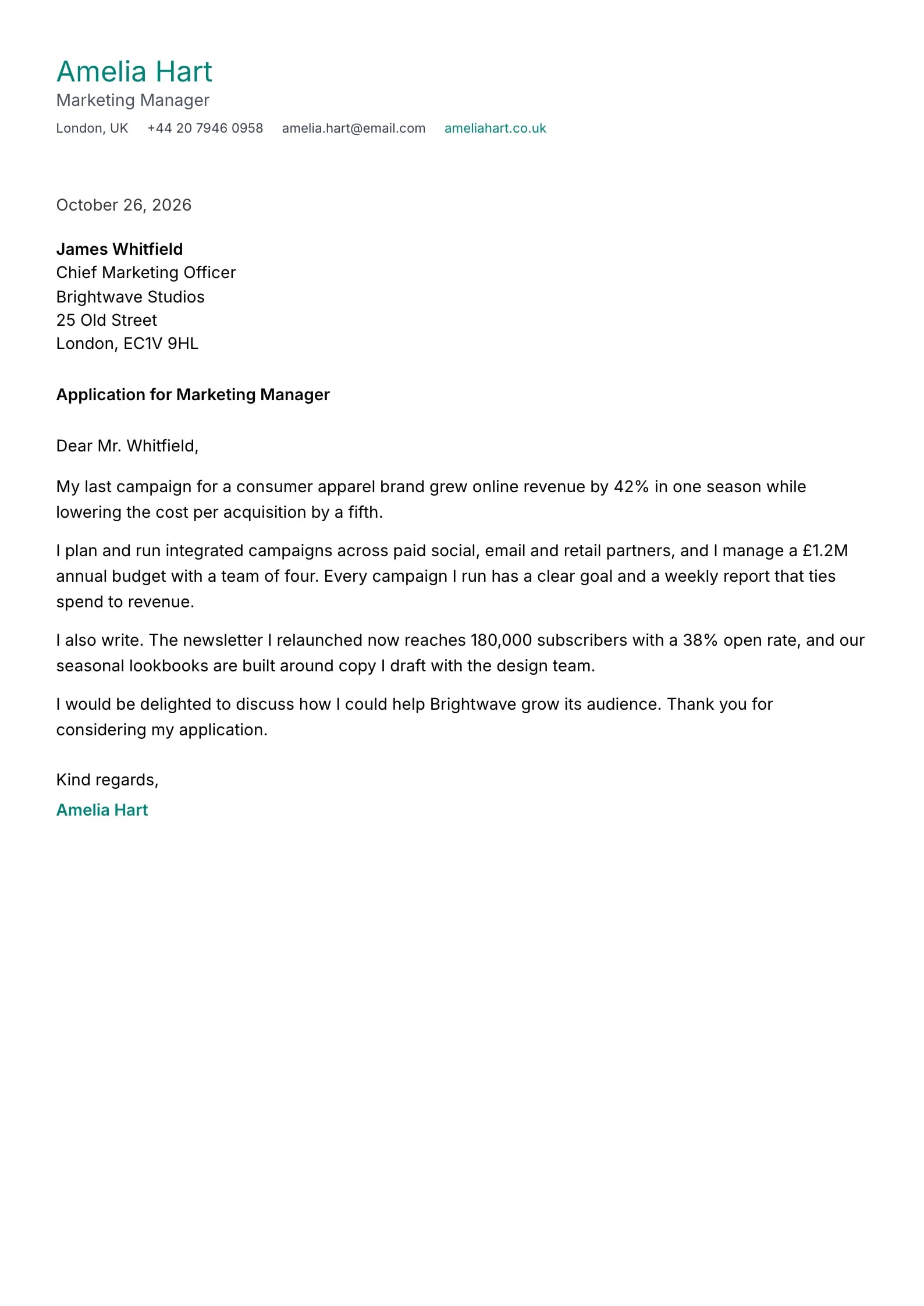
Matches the “Reef” resume template: same header, colors and fonts, so your letter and resume read as one set.
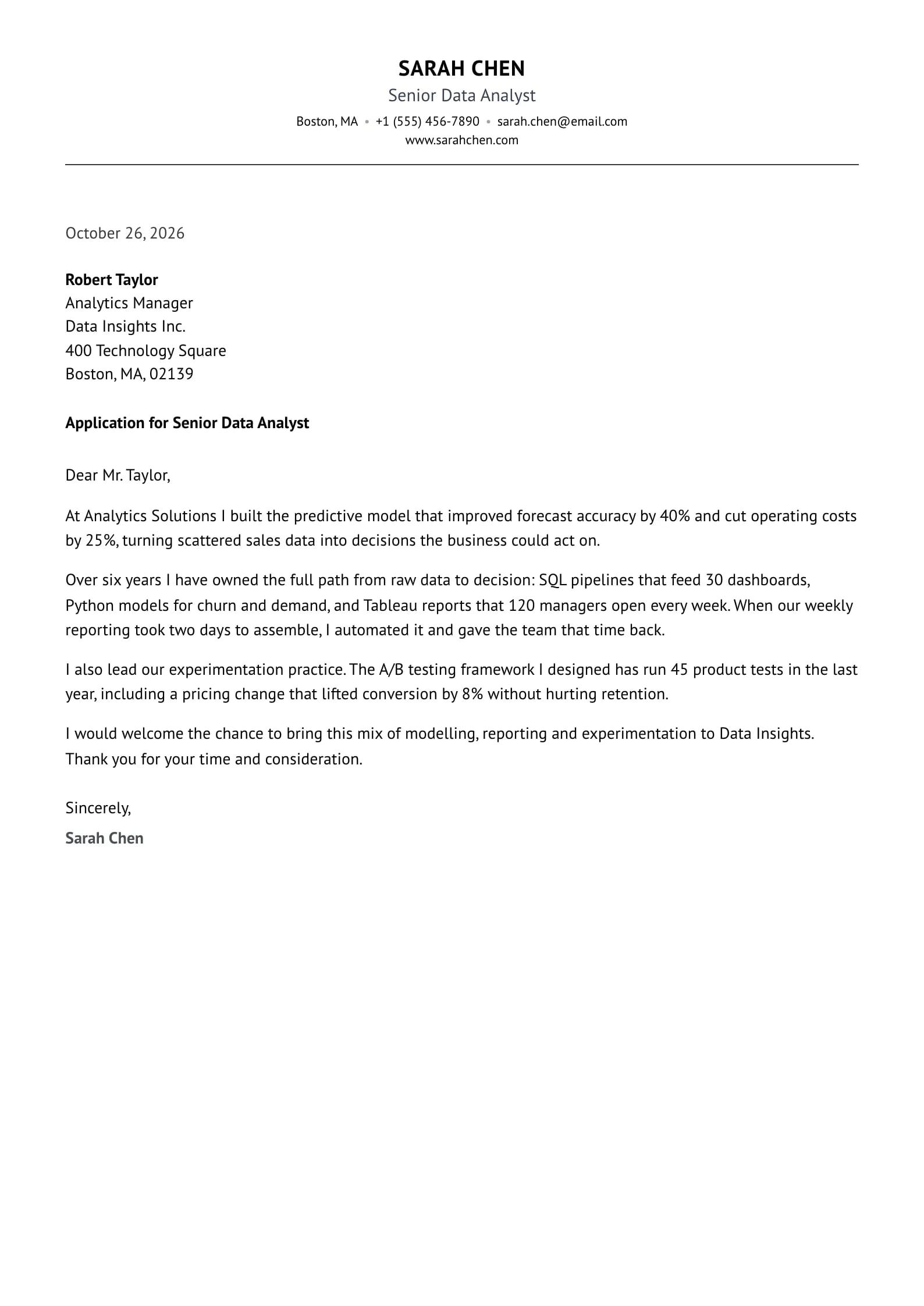
Matches the “Parchment” resume template: same header, colors and fonts, so your letter and resume read as one set.
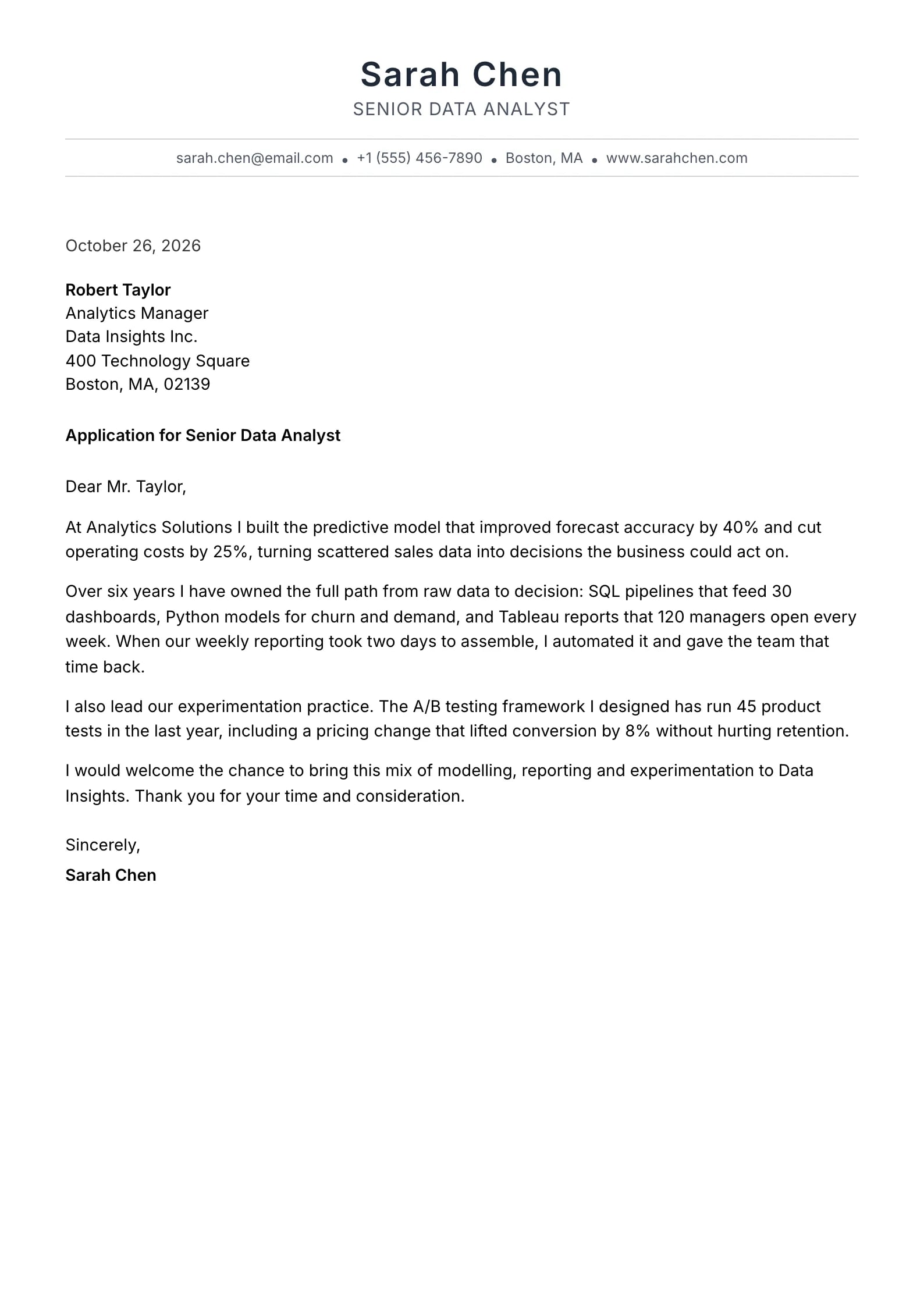
Matches the “Meridian” resume template: same header, colors and fonts, so your letter and resume read as one set.
A simple cover letter has four parts on one page: a header, a greeting, three or four short paragraphs and a sign-off. Below: the plain designs, a fill-in simple cover letter template to copy, five short examples for different roles and career stages, and the format rules that keep it ATS-friendly.
A simple cover letter template is a one-page letter layout with no design beyond the essentials: one readable font, left-aligned text in a single column, your name and contact details at the top and at most one rule or accent color. There are no photos, tables, text boxes or side columns.
Simple is not the same as basic writing. The plain layout is there so the reader goes straight to your opening result. It is the safest choice when you do not know the employer's culture, when you apply through an online form, and for entry-level and career-change letters, where the content has to do all the work.
Copy this into any editor, or open a simple design above and type straight into the builder. Keep the brackets' order; delete anything you cannot fill truthfully.
The paragraph, font and margin ranges follow the University of Michigan Career Center's cover letter guidance.
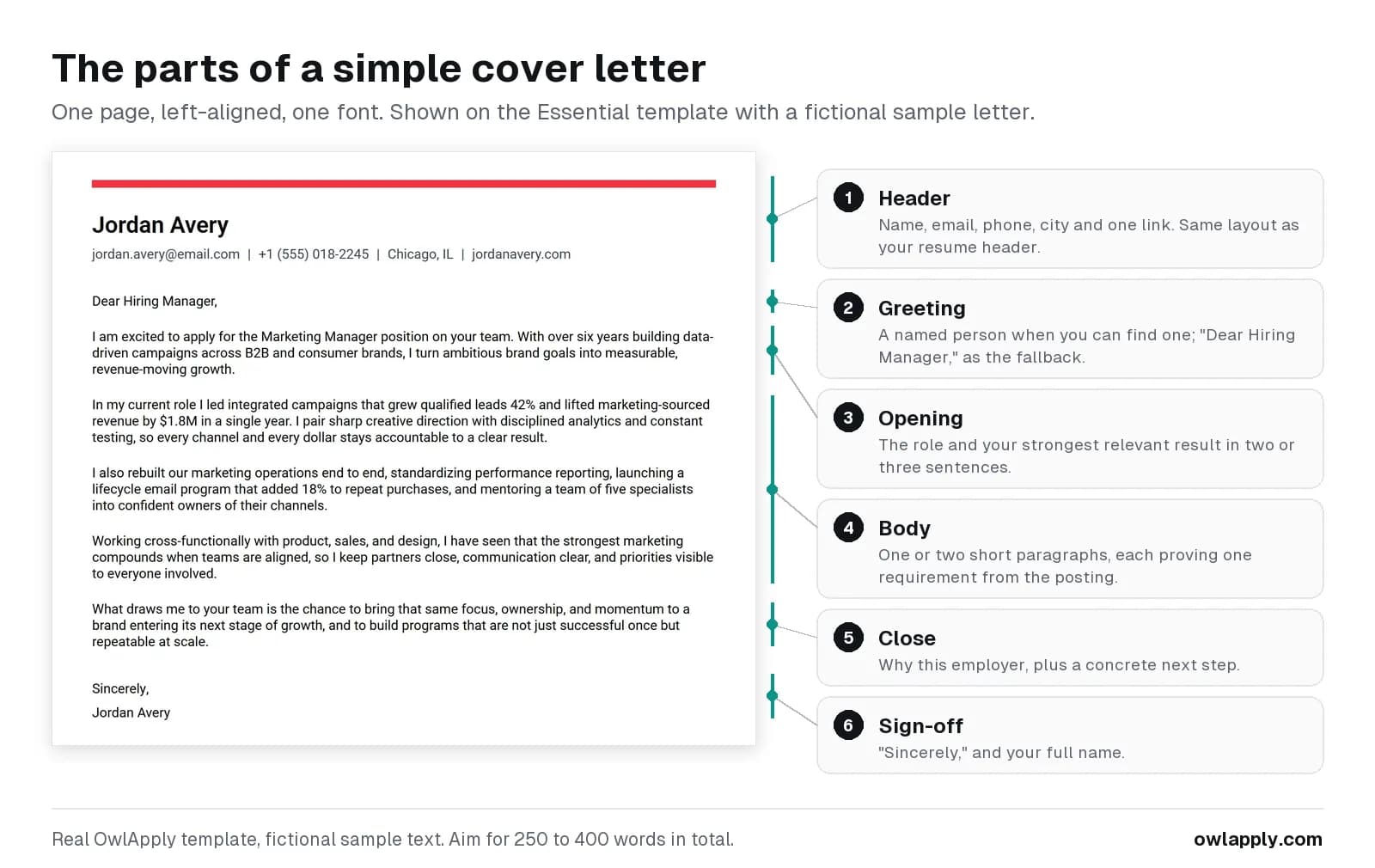
Your name, phone, email, city and state, and one link (LinkedIn or a portfolio). Skip your full street address and anything personal such as age or a photo. Use the same name format and order as your resume header.
Address a named person when the posting or a quick LinkedIn search gives you one; otherwise "Dear Hiring Manager," is fine. The opening names the role and gives your strongest relevant result in two or three sentences. For more first lines, see these cover letter opening lines.
One or two short paragraphs, each proving one requirement from the posting with a real example. The close says why this employer and proposes a next step. Sign off with "Sincerely," and your full name. Total: 250 to 400 words. If you would rather start from a draft, the AI cover letter generator writes one from your resume and the job description.
Five short letters built on the simple template above, each under 200 words. Names, companies and numbers are fictional; the structure is the point.
When the email itself is the cover letter, keep it to three or four sentences and attach your resume.
Yes. Applicant tracking systems store your letter alongside your resume, and what they need is real text in one reading order. Simple templates give them exactly that: no columns to read out of order, no text inside images or text boxes, and standard fonts. A simple design is also the most reliable choice when a form lets you upload only one file.
ATS-friendly is about structure, not plainness alone. Two habits matter as much as the template: use the job title exactly as the posting writes it, and mention the two or three skills the posting repeats, in your own sentences. Check the resume you send with it in the ATS resume checker.
| Style | Looks like | Choose it when |
|---|---|---|
| Simple | One font, one thin accent, single column | You are unsure of the culture, applying online, or entry-level |
| Professional | Formal letterhead, serif type, business-letter blocks | Finance, law, government, senior roles |
| Modern | Sans-serif, accent color, structured header | Tech, startups, product and marketing |
| Creative | Color blocks, banners, side panels | Design, media and brand roles |
See the other families: professional, modern and creative cover letter templates, or browse all cover letter templates.
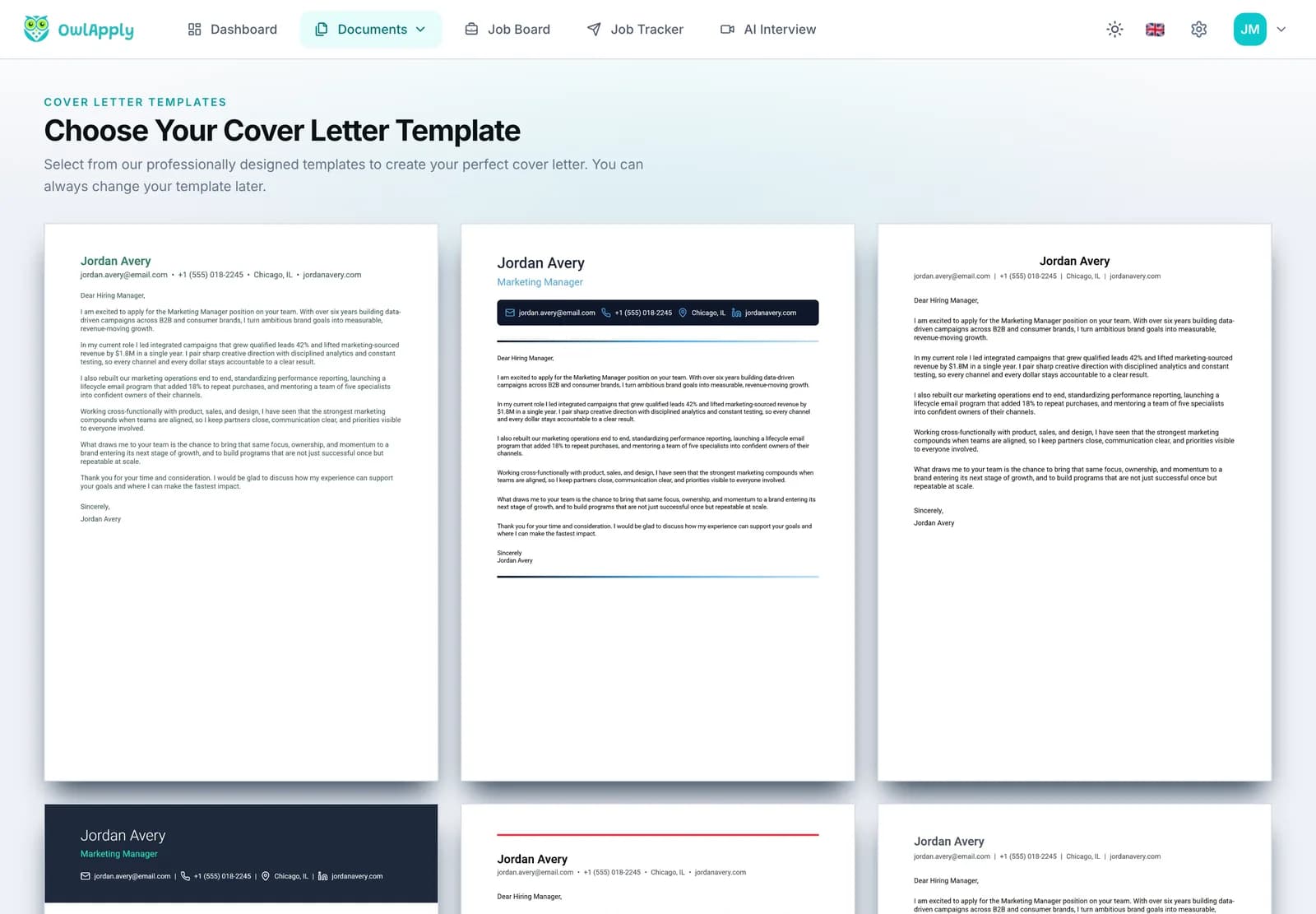
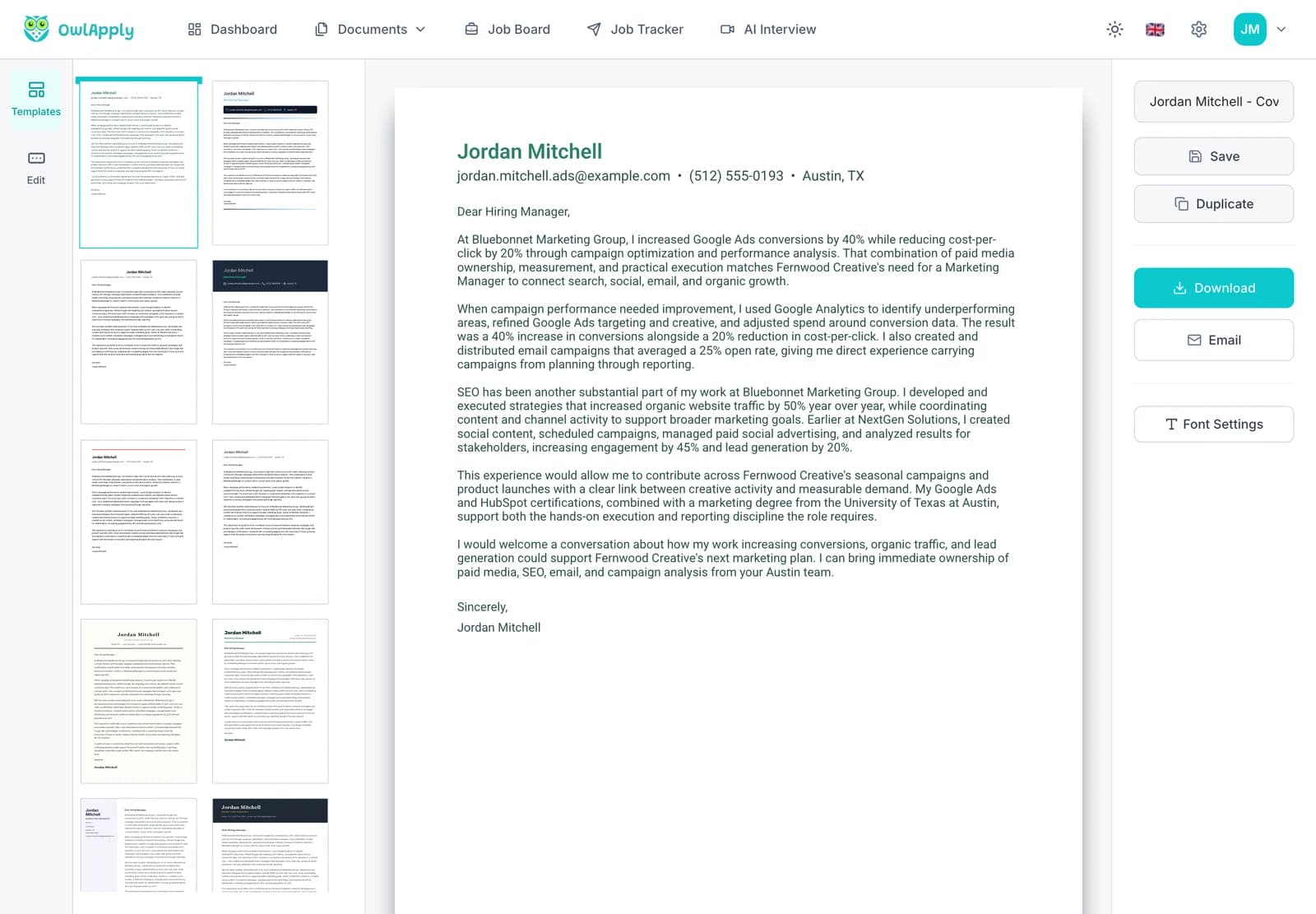
Click Use This Template on any design above in the Simple tab. It opens in the cover letter builder with a sample letter already in place, so you can see the finished layout before you type a word.
The editor has three steps: Personal Info (name, title, email, phone, location, website), Letter Details (date and recipient) and Content (greeting, introduction, body paragraphs, closing and signature). Add, remove or reorder body paragraphs, and hide any field you do not need.
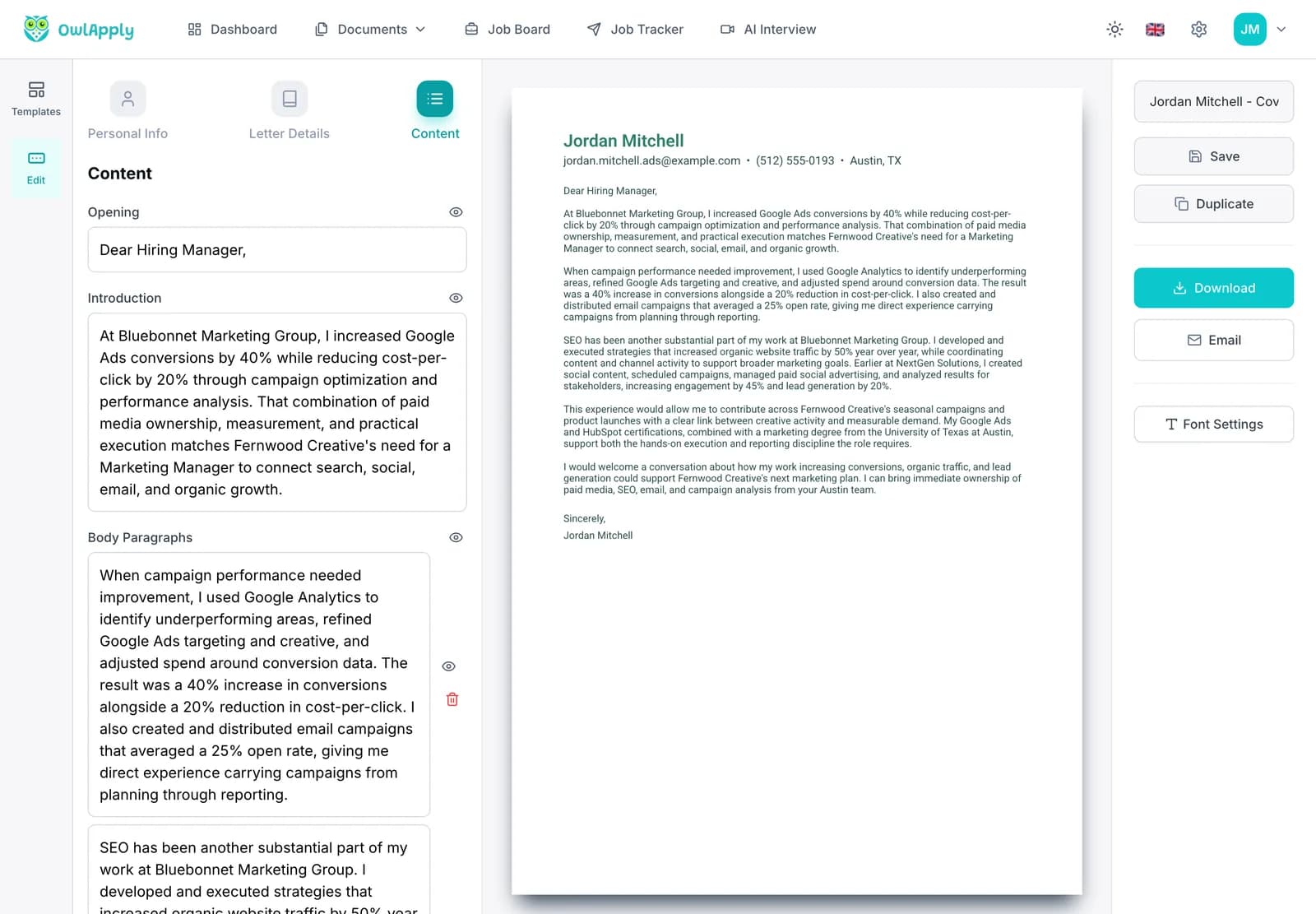
Try other templates from the Templates tab: the text stays exactly as you wrote it. Adjust the font in Font Settings, save the letter to your account, duplicate it for the next job, and download it as a PDF or email it.
Not to recruiters. They decide on content, and a plain page makes your content faster to find. The evidence that letters matter is about tailoring, not design: in ResumeGo's field experiment with 7,287 applications, a cover letter tailored to the job lifted callbacks 53% over sending none, and 81% of the 236 hiring professionals it surveyed valued tailored letters significantly more than generic ones.
If you want a touch of personality without leaving the simple family, use a colored name with a thin rule (Reef) or a single accent rule (Pewter). Axis, from the creative family, is exactly that: a plain letter with a colored name and a thin rule.
Open a simple design with a sample letter in place, replace the text with your own and switch designs at any time.