
Painter Resume Examples

Painter Intern
Why this resume works:
- Prepped 12,000 sq ft/day on a 48,000 sq ft Behr commercial repaint
- EPA RRP awareness and OSHA 10 credentials earned in first season
- Zero rework callbacks and zero incidents across both roles

Junior Painter
Why this resume works:
- 800–1,200 sq ft/day production rate on Sherwin-Williams commercial accounts
- EPA RRP Lead Renovator and OSHA 30 certified in year one
- 40+ commercial projects delivered on time with zero EPA violations

Senior Painter
Why this resume works:
- 3,000–4,500 sq ft/day crew production on Sherwin-Williams preferred contractor sites
- 12 multifamily repaint contracts averaging $120K each, all on time and under budget
- OSHA 30, EPA RRP Lead Renovator, and PDCA membership

Lead Painter
Why this resume works:
- 5,500 sq ft/day crew output on Behr commercial contracts; 18 projects/year at $2.1M volume
- Material takeoffs within 2% accuracy, saving $28K/year in overruns
- OSHA 30, EPA RRP, and Texas State Contractor License

Painter Manager
Why this resume works:
- Grew division revenue from $2.8M to $4.6M over 3 years
- 18,000+ sq ft/day across 3 concurrent commercial crews at a Sherwin-Williams preferred contractor
- OSHA 30, EPA RRP, and Georgia Contractor License

Senior Painter Manager
Why this resume works:
- Scaled division revenue from $4.2M to $7.8M over 5 years
- 22,000 sq ft/day across 4 crews; zero OSHA recordable incidents for 3 consecutive years
- OSHA 30, EPA RRP, PDCA Accreditation, and WA State Contractor License

Studio Head
Why this resume works:
- $2.4M annual contract revenue; 28% divisional growth through hospitality and theme park expansion
- 18,000–22,000 sq ft/day managed production across a 12-painter Behr commercial studio
- OSHA 30, EPA RRP, and California C-33 Contractor License

Painter Specializing in Mixed Media
Why this resume works:
- 75% gallery sell-through; $95K+ in private commissions with 97% first-review approval
- Kehinde Wiley Studio production contract; work in museum collections
- 22,000+ social media following; 40% of commissions sourced via Instagram

Painter Specializing in Abstract Art
Why this resume works:
- 80% gallery sell-through; $105K+ in commissions with zero disputes over 4 years
- 3 corporate collection placements totaling $68K; 4 solo and 12 group exhibitions
- 1,200+ collector mailing list; 32% of new commissions from list subscribers

Painter Specializing in Portraiture
Why this resume works:
- 120+ commissions, $140K+ revenue, 99% first-sitting approval and 100% on-time delivery
- 40% average commission value growth from 2019 to 2024
- 45% of annual revenue from institutional referrals (law firms, universities, executive search)

Painter Specializing in Landscapes
Why this resume works:
- $130K+ career primary market sales; 72% gallery sell-through rate
- 8–10 workshops/year nationally with 85% student rebooking rate
- 20+ private commissions with 100% on-time delivery and zero revisions

Painter Specializing in Still Life
Why this resume works:
- 65% gallery sell-through; $75K+ primary market sales; 12 commissions with 100% on-time delivery
- Social media growth from 800 to 9,200 followers; 28% of collector inquiries from digital channels
- Work in 8 private collections; 2 solo exhibitions curated and installed

Junior Painter's Assistant
Why this resume works:
- Supported crews across 15+ commercial sites totaling 120,000+ sq ft
- 25% reduction in lead painter setup time through material staging
- OSHA 10 certified with clean safety record from first season

Painter
Why this resume works:
- Gallery representation (Jack Shainman Gallery) plus Whitney Museum and SFMOMA acquisitions
- Pollock-Krasner Foundation and NYFA grants; MacDowell, Yaddo, and Skowhegan residencies
- $210K in private commissions; 78% gallery sell-through across 6 solo exhibitions

Lead Supervisor
Why this resume works:
- Supervised 15,000+ sq ft/day across 3–5 concurrent Sherwin-Williams commercial sites
- 30% material cost reduction and 95% client satisfaction across 80+ accounts
- OSHA 30, EPA RRP, First Aid/CPR, and NY State Contractor License

Specialized Painter (Decorative)
Why this resume works:
- 150+ luxury residential projects with 98% no-revision client approval rate
- 18 hotel projects on time and within budget; estimates accurate within ±5%
- EPA RRP Lead Renovator certified; PDCA professional member

Industrial Painter
Why this resume works:
- 6,000–8,000 sq ft/day airless and plural-component spray on refinery and structural steel assets
- Zero coating failure callbacks across projects averaging $180K–$450K
- OSHA 30, SSPC C-7 Protective Coatings Specialist, and NACE Level 1 Inspector certified

Special Effects Painter
Why this resume works:
- 15+ major film/TV productions at Warner Bros. and Universal; up to 12,000 sq ft per project
- 18% scenic paint material cost reduction; zero reshoots attributable to paint defects
- Crew of 4–6; 3 junior painters mentored to mid-level positions within 2 years

Fine Artist Painter
Why this resume works:
- 82% gallery sell-through; $180K+ in private commissions with 99% client approval rate
- 35+ exhibition works per year across 4 solo and 9 group shows in NY, Chicago, and Miami
- 55% of new commissions generated through collector referrals

Restoration and Conservation Painter
Why this resume works:
- 45+ historic structures restored; period tint matched within 3 Delta-E on all projects
- Zero EPA compliance findings over 10 years of lead-disturbance work on pre-1978 properties
- EPA RRP Lead Renovator, OSHA 30, and IIC Associate Conservator certified
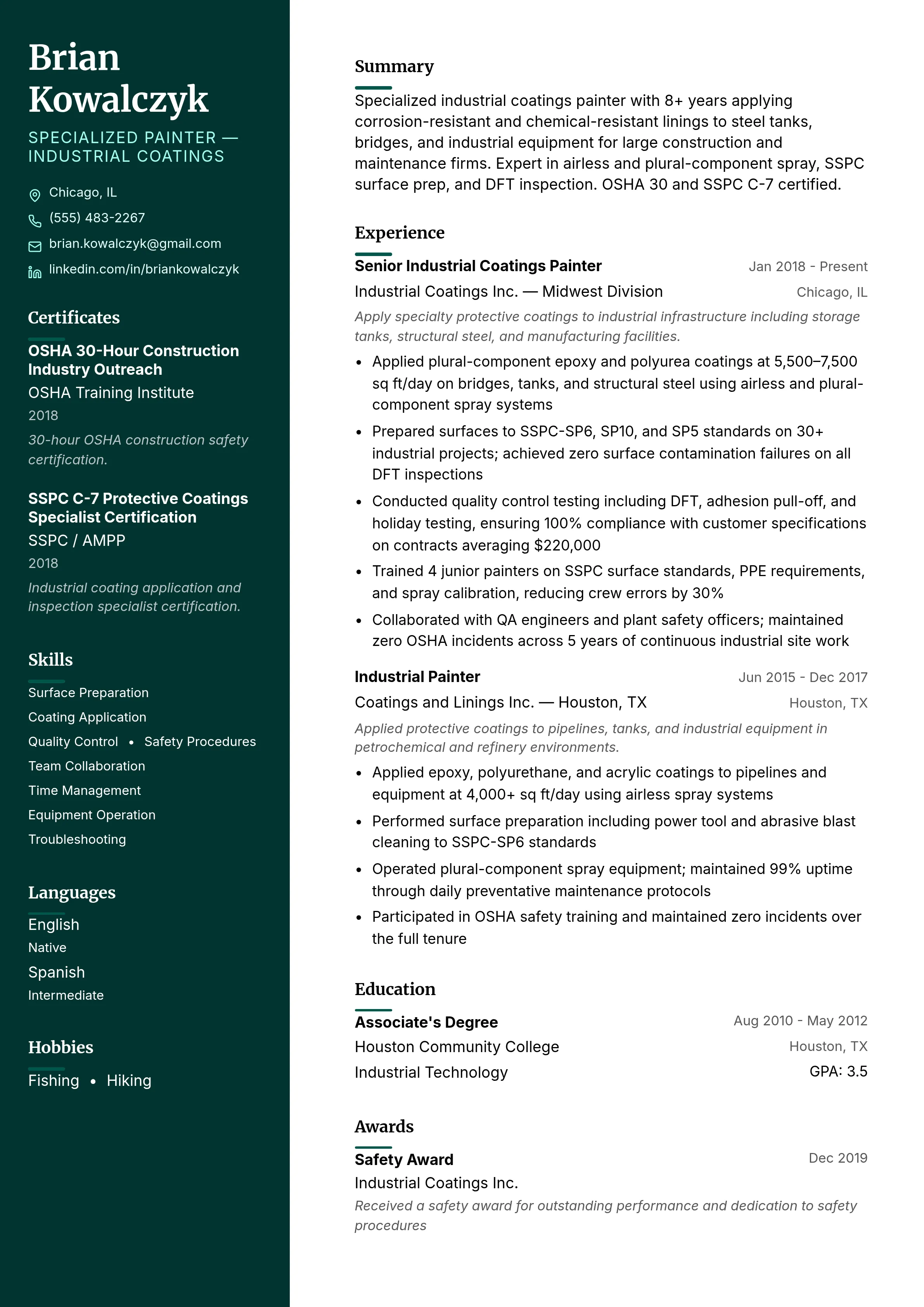
Specialized Painter (Industrial Coatings)
Why this resume works:
- 5,500–7,500 sq ft/day plural-component and airless spray on tanks, bridges, and structural steel
- Zero surface failures on all DFT inspections across 30+ projects averaging $220K
- OSHA 30 and SSPC C-7 Protective Coatings Specialist certified

Freelance Painter
Why this resume works:
- 200+ projects, 320,000+ sq ft completed; 97% client satisfaction and 35% repeat-client rate
- 4.9-star Google Business rating across 85 reviews; estimates accurate within 4%
- EPA RRP Lead Renovator and OSHA 10 certified

Painter's Apprentice
Why this resume works:
- 1,200–1,800 sq ft/day in active PDCA-registered apprenticeship; 30+ commercial projects
- OSHA 30 and EPA RRP Lead Renovator certified before reaching journeyman status
- PDCA Apprentice of the Year award and 100% safety record across 28 months

Studio Painter
Why this resume works:
- 68% gallery sell-through; $85K+ in private commissions with 100% on-time delivery
- 3 commercial murals (4,200–7,500 sq ft) for hospitality clients; all on schedule and within budget
- 28+ exhibition works per year across 12 group and 2 solo shows

Painter Instructor
Why this resume works:
- 300+ students taught per semester; 95% satisfaction and 90% program retention rate
- 25% enrollment growth through new evening course series; 80% of graduates placed within 6 months
- Industry-aligned commercial painting module developed and permanently adopted into curriculum
Check your Painter resume against an ATS parser before you send it
The Painter examples above show what a parser-readable resume looks like. Whether yours reads the same way is a separate question: upload it to the free ATS resume checker and read the text a parser actually pulls from the file. Across 44,255 checks, only 5.8% of PDFs came through with no layout finding; a table used for layout (32.7%) and non-standard section headings (39.2%) were the usual reasons.
- •ATS resume checker: score, extracted text and 34 checks, free, no account.
- •ATS-friendly resume templates: layouts tested on Workday, Greenhouse, Lever and Taleo.
What Recruiters Want to See on Your Painter Resume
- Technical Skills: Proficiency in various painting techniques such as faux finishing, glazing, and texture painting, which demonstrates versatility and depth of skill.
- Color Theory Knowledge: Understanding of color mixing, color matching, and color psychology, essential for creating aesthetically pleasing results.
- Surface Preparation Expertise: Ability to prepare different surfaces, including drywall, metal, and wood, so long-lasting paint application.
- Attention to Detail: Precision in application, from edging to layering, which guarantees a clean and professional finish.
- Portfolio of Work: A well-organized and visually appealing portfolio showcasing previous projects to provide tangible proof of talent and style.
- Familiarity with Safety Practices: Knowledge and adherence to industry safety standards and regulations to ensure safe work environments.
- Project Management Skills: Experience in planning, executing, and completing projects within deadlines and budget constraints.
- Customer Communication: Strong interpersonal skills to understand client needs and provide satisfactory results.
- Tools and Equipment Proficiency: Skilled in using brushes, rollers, sprayers, and other equipment, increasing efficiency and effectiveness.
- Problem-Solving Abilities: Creative and resourceful in overcoming challenges on the job, such as unpredictable weather conditions or material shortages.
Expert Tips for Optimizing Your Painter Resume
- •Highlight Specialized Techniques: Make sure to emphasize any specialized techniques you are particularly skilled at, such as trompe l'oeil or Venetian plaster. This can set you apart from other candidates.
- •Include Measures of Success: Whenever possible, use specific metrics to quantify your success in previous projects, such as percentage improvement in client satisfaction or time saved on projects.
- •Tailor Your Resume for Each Job: Adjust your skills and experiences to align with the specific requirements of each painting job description. This shows employers that you are the perfect fit for their needs.
- •Use high quality Images: Lift your portfolio with high quality images of your work. This visual proof can be a deciding factor for recruiters looking to assess your skills and style.
- •Certifications and Continued Education: List any certifications, workshops, or courses completed that demonstrate your commitment to staying current in the field.
How to write a painter resume
How to write a painter summary or objective
Understanding an Effective Painter Resume Summary
A well-crafted Painter resume summary is your first impression and can make or break your chances of landing a job. It should be concise, informative, and tailored to reflect your unique skills and experiences.
- •A strong summary captures your most relevant skills.
- •It sets you apart from other candidates.
- •The summary should align with the job description.
- •It should reflect your passion and commitment to painting.
- Begin with a powerful statement about your professional identity.
- Highlight your years of experience.
- Mention specific painting techniques or specialties.
- Include any relevant certifications or training.
- Demonstrate your attention to detail and creativity.
- Express your dedication to safety and quality.
- Tailor it to the job description: Use keywords from the job posting.
Common Mistakes to Avoid
The key to tailoring your resume summary for different experience levels is to focus on the aspects that match your career stage. Here's how you can tailor your summary accordingly:
- Entry-Level: Emphasize willingness to learn and foundational skills acquired through education or apprenticeship.
- Mid-Level: Focus on developed skills and projects that surface your growing expertise.
- Senior-Level: Highlight leadership roles, advanced techniques, and contributions to major projects.
Resume Summary Examples for Painters
How to write a painter work experience
Best Practices for Structuring Work Experience
- •Begin with your job title, employer's name, and employment dates.
- •Use bullet points for easy readability and focus on what you achieved.
- •Start each bullet point with an action verb.
- •Limit each job entry to 6-8 bullet points.
- •Highlight specific projects or notable clients if applicable.
When crafting the work experience section for a painter, it's crucial to emphasize relevant skills, techniques, and accomplishments specific to painting. Painters should focus on showcasing experience in using various paint types, applying specific techniques, and effectively preparing surfaces.
How to Highlight Achievements and Skills
- •Mention specific painting techniques you are proficient with, like faux finishing or marbling.
- •Discuss projects that involved large-scale undertakings or collaborations with designers.
- •Include any recognition received, such as awards or client commendations.
- •Highlight leading a team or training new painters.
- •Showcase any additional skills like color-matching or paint mixing.
- •Emphasize your ability to follow blueprints or detailed plans.
- Coordinated
- Applied
- Supervised
- Mixed
- Executed
- Advised
- Preserved
- Enhanced
- Interpreted
- Accomplished
Using the right industry-specific terminology can significantly lift your resume. For painters, words like 'surface preparation', 'primer application', 'trim work', and 'custom finishes' are essential. Demonstrating your familiarity with industry standards and terminology shows potential employers that you're well-versed in your craft.
Tips for Quantifying Accomplishments
- •Use numbers to highlight the scale of the projects (e.g., square footage painted).
- •Mention the variety of surfaces or conditions you have experience with.
- •Provide statistics on improved efficiency or cost savings due to your work.
- •Detail any reduction in material wastage or time saved by your methods.
Focus on consistency in your work history, and when discussing job hopping, emphasize the diverse experience gained. For career gaps, put a positive spin on them by mentioning any skill development or freelance work you've done during that time.
Work Experience Examples for Painters
Top hard skills and soft skills for painter resumes in 2026
| Hard Skills | Soft Skills |
|---|---|
| Color theory | Attention to detail |
| Surface preparation | Creativity |
| Spraying techniques | Time management |
| Brush handling | Communication |
| Mixing paints | Problem-solving |
| Safety protocols | Adaptability |
| Scaffolding usage | Teamwork |
| Texture application | Patience |
| Staining | Work ethic |
| Wallpapering | Customer service |
Eight to fifteen entries is the working range for a Painter resume, not the full table. skills to put on a resume covers what to cut, where to prove each one, and the phrasing parsers match.
Best certifications for painter resumes in 2026
- OSHA 10 Certification: This certification demonstrates a commitment to safety and ensures that the painter is knowledgeable about workplace hazards, which is crucial in maintaining a safe painting environment.
- Certified Lead Renovator: Required for painters who may come in contact with lead-based paint, this certification shows that the individual is trained to safely handle and remove lead in compliance with EPA regulations.
- NACE Coating Inspector Program (CIP) Level 1: This certification is valuable for painters who work with industrial coatings, as it verifies their ability to inspect coatings properly to ensure durability and effectiveness.
- Painting and Decorating Contractors of America (PDCA) Accreditation: Recognized by the industry, this certification confirms that a painter adheres to high industry standards and ethics, so quality workmanship.
- Color Specialist Certification: This highlights a painter's expertise in color theory and application, making them valuable for projects that require precise color matching and aesthetic understanding.
- Scaffold and Ladder Safety Certification: Critical for painters who frequently work on elevated surfaces, this certification ensures they can safely use scaffolding and ladders, reducing the risk of falls.
- First Aid/CPR Certification: While not painting-specific, this certification is crucial for on-site safety, allowing a painter to respond quickly and effectively to emergencies.
- Spray Finishing Certification: This certifies a painter's ability to apply spray finishes efficiently and correctly, a skill that enhances project quality and reduces material waste.
How to format your painter resume
- Clearly define sections with headings: Use bold and slightly larger font for section titles (e.g., Work Experience, Skills, Education) to improve readability.
- Maintain consistency in font type and size: A common choice is a professional, clean font like Arial or Times New Roman, with size 10-12 for body text.
- Use bullet points to detail responsibilities and achievements: This makes it easier for hiring managers to skim through and pick out key information at a glance.
- Limit your resume to one page: Since painter positions are often evaluated on experience, focus on the most recent and relevant jobs.
- Include a summary statement at the top: A brief 2-3 line summary to highlight your experience level and paint specialties.
- Chronological or functional format: Use a reverse-chronological format if you have consistent experience or a functional format to emphasize specialized skills.
- Use color sparingly: While a creative field might allow for some design elements, keep it professional and easy to read.
- Include quantifiable achievements: When possible, quantify your accomplishments (e.g., number of projects completed, size of team led, etc.).
- Tailor your resume for each position: Highlight the skills and experiences that are most relevant to the job you are applying for.
Key Sections of a Painter Resume
- •Contact Information: Full name, phone number, email address, and physical address.
- •Professional Summary: Brief statement that outlines your skills, experiences, and career goals as a painter.
- •Work Experience: List your previous employment with details on your roles and responsibilities in reverse-chronological order.
- •Skills: Highlight technical skills (e.g., spray painting, surface preparation) and soft skills (e.g., attention to detail, time management).
- •Education: Briefly list any relevant education or training related to painting.
- •Certifications: Include any certifications relevant to the painting industry (e.g., OSHA, lead-based paint certifications).
- •Portfolio or Examples of Work: Mention where potential employers can view examples of your work, especially if you have an online portfolio.
Common Mistakes to Avoid
Do this
- List specific painting techniques you are proficient in, such as faux finishes, staining, or mural creation.
- Highlight any formal training or certifications in painting or related fields, such as an apprenticeship or a diploma in fine arts.
- Include details about past projects, such as residential, commercial, or specialty painting jobs, and any notable clients or collaborations.
- Emphasize safety training and adherence to safety regulations, especially if working at heights or with hazardous materials.
- Showcase a portfolio or links to samples of your work to provide employers with visual evidence of your skills.
- Quantify achievements where possible, such as the number of projects completed on time and within budget.
- Mention any additional skills relevant to painting, like drywall repair, wallpapering, or color consulting.
Avoid this
- Don't neglect to tailor your resume to the specific painting job you are applying for, such as residential vs. commercial painting.
- Avoid using generic statements that don't demonstrate your unique skills and experiences in painting.
- Don't include irrelevant work experience that doesn't relate to painting, unless it provides transferable skills.
- Avoid cluttering your resume with too much technical jargon that may confuse readers who are not experts in painting.
- Don't forget to proofread your resume for spelling and grammatical errors, as these can detract from your professionalism.
- Don't fail to update your contact information or overlook adding a professional email address.
- Avoid including personal information such as age, marital status, or a photograph which are not relevant to the job application.
Key Takeaways for Your Painter Resume
Essential Resume Tips for Painter Positions
- •Highlight Relevant Experience: Clearly outline your experience in painting, especially in environments similar to the job you're applying for.
- •Showcase Skills: Emphasize skills like attention to detail, time management, and knowledge of different painting techniques and tools.
- •Use Specific Examples: Include examples of past projects, describing the scope, techniques used, and any positive outcomes.
- •Quantify Achievements: Where possible, quantify your achievements, such as the size of projects or efficiency improvements.
- •Include Certifications: Mention any relevant certifications or training in painting or related areas such as safety practices.
- •Highlight Specializations: If you specialize in a particular type of painting (e.g., decorative, residential, industrial), make sure this is clearly stated.
- •Show Problem-Solving Skills: Describe situations where you effectively dealt with challenges or solved problems on the job.
- •Include References: Where possible, include testimonials or references from past employers or clients to back up your skills and reputation.
- •Tailor Your Resume: Customize your resume for each job application, focusing on the most relevant experience and skills for each specific role.
Related Resume Examples: Skilled Trades
Hiring managers in Skilled Trades read the same signals across neighbouring roles. If the Painter example is close but not exact, these are the nearest ones: